
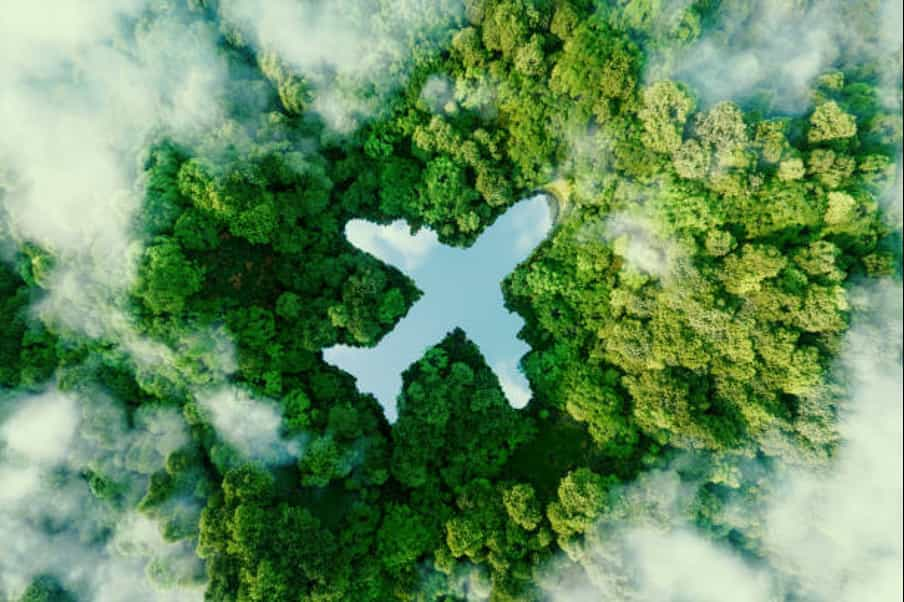
For more than half a century, aviation has defined the modern idea of travel. Planes made distant places feel accessible, compressed time, and helped build a global tourism economy around speed. But the future of sustainable travel is beginning to look different. Climate pressure, rising scrutiny of emissions, new transport policy, and changing traveler expectations are all pushing tourism beyond its dependence on airplanes. The next era of travel will not be anti-mobility. It will be more diversified, more deliberate, and more grounded in systems that move people with less environmental cost.
This does not mean aviation disappears. It will remain essential for many long-distance, intercontinental, and geographically isolated routes. But it is increasingly clear that a sustainable future cannot rely on airplanes as the automatic answer to every trip. Instead, travel is moving toward a broader mobility model: rail-first where possible, public transport integrated into tourism, digital tools that steer people toward lower-carbon choices, and a stronger focus on fewer, longer, and more intentional journeys. Recent transport and travel reporting suggests that this shift is no longer hypothetical. It is already underway.
Sustainable transport is becoming a global framework
One of the clearest signs of this shift is political. The United Nations formally launched the first UN Decade of Sustainable Transport in 2026, designed to raise awareness, mobilize partnerships, and accelerate transport systems that support climate action and the Sustainable Development Goals. The implementation framework highlights priorities such as ensuring access to sustainable transport for all, advancing low- or zero-carbon systems, improving connectivity, fostering people-centered urban mobility, and leveraging science and innovation.
This matters for travel because it reframes transport not as a narrow technical issue, but as a central part of climate, resilience, health, and development. The UN’s background documents explicitly recognize transport as an enabler for multiple goals, including energy efficiency and tackling climate change. That changes the context in which tourism operates. Sustainable travel is no longer only about hotel certifications or offset programs. It increasingly depends on the underlying transport systems that make trips possible in the first place.
In practical terms, this means the future of tourism is being shaped not only by airlines and destinations, but also by rail investment, urban mobility design, digital routing technology, and cross-border ground transport policy.
Rail is moving to the center
If the future of sustainable travel goes beyond airplanes, rail is likely to be one of its main pillars. Business travel sustainability analysis for 2026 says that companies across Europe and beyond are increasingly shifting short-haul flights to high-speed rail and other lower-carbon modes when travel time and cost are comparable. It notes that rail-first policies are gaining speed not only for emissions reasons, but also because of comfort, convenience, and predictability.
This is a major change in travel logic. For years, rail was often framed as the nostalgic or slower alternative to flying. Now it is being repositioned as the smart default for many regional trips. High-speed rail already competes strongly with aviation on many short- and medium-distance corridors, and its environmental profile improves further as electricity grids decarbonize.
The broader future may involve more than high-speed networks alone. It may also include better conventional rail, easier international booking, and rail integrated directly into travel policy and booking systems. Reports on sustainable business travel suggest that booking tools are already starting to nudge users toward rail instead of short-haul air, which is an early sign of how software can reshape transport behavior.
Night trains are part of the comeback
One of the most interesting developments beyond airplanes is the revival of sleeper and night trains. Future Rail reported in 2024 that the main argument in favor of night trains is environmental, noting that electric trains emit 23 times less CO2 per passenger-kilometer than planes and 17 times less than cars, according to a French government study cited in the article. The same piece argues that night trains can attract new travelers to rail while using less energy than some high-speed services because they travel more slowly.
Other reporting describes this return as part of a wider European resurgence. Revolve noted that night trains have expanded across the continent since 2021 and cited an estimate that, on average in the EU, night trains have a climate impact 28 times lower than air travel in greenhouse gas terms. The appeal is not only climate-related. Night trains combine transport and accommodation, which can save time and money while creating a travel experience that feels more connected and less rushed.
That combination makes sleeper rail especially important for the future of sustainable tourism. It addresses one of the main barriers to shifting away from planes: the perception that overland travel always costs too much time. By turning travel time into overnight rest time, night trains offer a practical middle path between speed and sustainability.
Air travel will change, but not solve everything
A future beyond airplanes does not mean aviation stands still. Aviation institutions are also adapting. ICAO’s 2026–2050 strategic plan explicitly adopts the theme “Safe Skies, Sustainable Future,” and corporate travel analysis for 2026 highlights more precise emissions measurement, sustainable aviation fuel book-and-claim systems, and travel policies that steer people toward lower-carbon choices.
But these developments also reveal aviation’s limits. Much of the near-term strategy still depends on better accounting, efficiency, and SAF rather than full transformation of the sector. Sustainable aviation fuel remains important, but it is supply-constrained and not enough on its own to absorb continued flight growth. That is why the future of sustainable travel is likely to be “beyond airplanes,” not because aviation disappears, but because it cannot carry the full burden of sustainable mobility by itself.
In other words, cleaner aviation matters, but modal shift matters too. The future is likely to involve a combination of better planes for the flights that remain necessary and many fewer flights on routes where trains, coaches, ferries, or other ground options can do the job.
Digital tools will shape behavior
Another major part of the future is digital. Sustainable travel is becoming more data-driven, and that changes how people book trips. Travel program analysis for 2026 says companies are increasingly estimating emissions before travel occurs, nudging travelers at the point of booking, and introducing carbon-aware policies such as rail-first rules and traveler-level carbon budgets.
This matters far beyond business travel. It points to a future in which booking platforms show not just price and duration, but also emissions, route alternatives, and suggested lower-carbon modes. The more visible this information becomes, the easier it is for travelers to choose ground transport over flights when the tradeoff is reasonable.
Digital planning also helps solve complexity. One reason air travel became dominant is that it simplified booking across long distances. For sustainable transport to compete at scale, digital tools need to make trains, ferries, and mixed-mode travel just as legible. That process is already beginning.
Tourism may become slower and more local
The future beyond airplanes is not only about technology or infrastructure. It is also about culture. Many signs suggest that sustainable travel is moving toward longer stays, fewer trips, and more regional exploration. Sustainable travel reporting in 2026 describes rising pressure to rethink travel amid climate concerns and cost pressures, while tourism commentary increasingly frames sustainability as something that must be built into the structure of the trip, not added afterward.
This cultural shift favors overland travel naturally. Trains, coaches, and ferries fit better with slower itineraries, regional loops, and travel that values the journey rather than just the destination. Night trains, public transport-linked destinations, and mixed urban-rural routes may become more attractive as travelers look for experiences that feel lower-stress and more meaningful.
What the next decade could look like
If current trends continue, the next decade of sustainable travel may look something like this:
- More rail-first policies for business and regional leisure travel, especially on routes where trains are time-competitive.
- A stronger revival of sleeper trains and cross-border overnight routes.
- Better digital booking tools that compare emissions before travelers finalize a trip.
- More integrated urban mobility, where public transport, bikes, and walking are built into the tourism experience rather than treated as separate add-ons. This aligns with the UN’s people-centered urban mobility priority.
- Cleaner aviation reserved more often for routes that genuinely require it, rather than serving as the default for every medium-distance trip.
These shifts will not happen evenly. Some regions will move faster than others, and many infrastructure gaps will remain. But the overall direction is becoming clearer.
A broader idea of travel
The future of sustainable travel is not simply about replacing one machine with another. It is about expanding the idea of what travel can be. The launch of the UN Decade of Sustainable Transport, the return of night trains, the spread of rail-first travel policies, and the rise of carbon-aware booking tools all point toward a future where mobility is measured not only by speed, but by impact, resilience, and quality of experience.
Airplanes will still matter, but they are unlikely to define sustainable travel on their own. The more realistic future is plural: trains for many regional corridors, sleeper rail for longer overland journeys, public transport embedded into tourism, digital systems that guide better choices, and aviation used more selectively. That future goes beyond airplanes not by ending travel, but by making it smarter, lower-carbon, and more grounded in the realities of a warming world.