
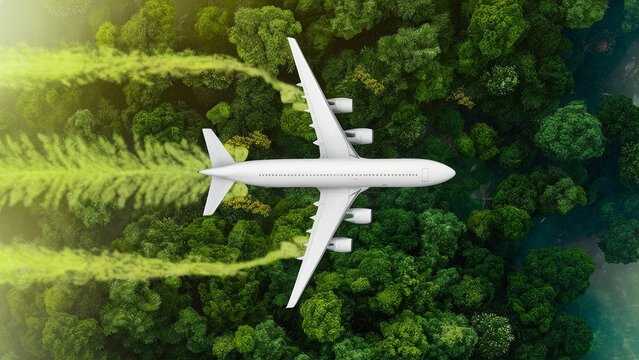
Climate change is driven by the accumulation of greenhouse gases in the atmosphere, and transportation is one of the largest contributors to those emissions. Within transportation, air travel holds a special place because it is both highly carbon-intensive and disproportionately used by a relatively small share of the global population. For that reason, reducing air travel is often considered one of the most meaningful personal actions people can take to lower their climate impact.
Flying has become deeply embedded in modern life. It is associated with convenience, speed, business mobility, tourism, and global connection. Cheap fares and expanding airline networks have made flying feel normal, even routine, for millions of travelers. Yet that normalization hides an uncomfortable truth: aviation carries a climate cost that is much higher than most people realize. While one flight may seem insignificant in isolation, the cumulative impact of frequent flying is substantial.
Reducing air travel helps fight climate change because it directly lowers demand for one of the most emissions-intensive forms of transportation. It also creates pressure for structural change, encourages the use of cleaner alternatives, and challenges the assumption that long-distance mobility must always come first. In a warming world, flying less is not about rejecting travel altogether. It is about making more responsible choices in a sector where emissions are difficult to eliminate quickly.
Why Aviation Has a Large Climate Impact
Airplanes burn large amounts of fuel to move people at high speeds across long distances. Unlike trains or buses, aircraft must generate lift, climb to cruising altitude, and sustain flight in a way that requires a high energy input. This makes aviation much more carbon-intensive per passenger than many ground transportation options, especially on short-haul routes where takeoff and ascent account for a large proportion of total fuel use.
The climate impact of flying is not limited to carbon dioxide alone. Aircraft also produce nitrogen oxides, water vapor, soot, and contrails at high altitude. These emissions interact with the atmosphere in ways that increase warming beyond the effect of carbon dioxide by itself. This is one reason aviation is especially problematic from a climate perspective. Even when people focus only on the carbon footprint of flights, they may still underestimate the real warming impact of air travel.
Another issue is growth. While some other sectors have clearer technological pathways to decarbonization, aviation remains hard to clean up at scale. Electric planes are not close to replacing commercial long-haul aviation, and sustainable aviation fuels are still limited in supply, expensive, and unlikely to solve the problem on their own in the near term. As global demand for air travel grows, efficiency improvements can be overwhelmed by the sheer increase in the number of flights.
Why Flying Less Matters So Much
For many individuals, air travel makes up a surprisingly large share of their total carbon footprint. A person may live in an energy-efficient home, drive relatively little, eat less meat, and try to consume responsibly, yet just one or two long-distance flights can outweigh many of those savings. This is why reducing flights can have an outsized climate benefit compared with other personal lifestyle changes.
The reason is simple: aviation emissions are concentrated. A short daily action such as switching off lights or using reusable bags may still be worthwhile, but its impact is small compared with a long-haul flight. Reducing one round-trip flight can eliminate a large amount of climate pollution in a single decision. That makes air travel an unusually powerful target for personal climate action.
This does not mean that every flight carries the same moral weight. People fly for many reasons, including family responsibilities, work, emergencies, migration, education, and geographic necessity. But from a purely climate standpoint, the fewer flights a person takes, the lower their contribution to aviation-related warming. In practical terms, cutting one unnecessary trip often matters more than making several smaller symbolic changes elsewhere.
Short Flights Are Especially Wasteful
One of the clearest ways reducing air travel helps fight climate change is by avoiding short-haul flights. These flights are particularly inefficient because airplanes burn the most fuel during takeoff and climb. On short routes, those high-emission stages account for a larger share of the journey, making emissions per kilometer especially high.
Many short flights also exist on routes where alternatives are available. Trains, buses, ferries, and car-sharing systems can often replace flights between nearby cities or regions. When travelers choose these options instead, they not only reduce emissions but also help build demand for cleaner transport systems. Replacing short flights is often one of the easiest and most realistic ways to cut travel-related emissions without giving up mobility.
Business travel is especially important here. Many corporate trips involve short regional flights taken for meetings that could sometimes be handled by rail or replaced by virtual communication. As remote work and video conferencing have become more accepted, reducing unnecessary business flights has become both more practical and more socially acceptable.
Lower Demand Can Drive System Change
Reducing air travel is not only about direct emissions. It also affects the broader system. When fewer people fly, airlines face less pressure to expand routes, airports face less pressure to grow, and policymakers have more space to support alternatives such as rail infrastructure and intercity public transportation. Individual choices alone will not solve climate change, but collective behavioral shifts can influence markets and policy.
Demand matters because transport systems evolve in response to what people use and what governments prioritize. If travelers continue to assume that flying is always the default, then aviation will keep receiving infrastructure support, marketing attention, and policy protection. But if more people begin to choose trains, buses, and slower regional travel, that sends a signal that lower-carbon systems deserve greater investment.
Social norms also matter. For many years, frequent flying was associated with status, opportunity, and success. In some circles, taking many flights for work or leisure was seen as aspirational. That perception is beginning to change. More people now view unnecessary flying as a climate issue, and that cultural shift can reinforce political and economic pressure for greener transport solutions.
Alternatives Become More Attractive
One of the most positive effects of reducing air travel is that it pushes people to rediscover alternatives. Train travel, overnight buses, ferries, cycling routes, and even local tourism become more appealing when flights are no longer treated as automatic. These modes are often less carbon-intensive and can make the trip itself more enjoyable.
Traveling by ground transport allows people to see landscapes change gradually, spend time in intermediate destinations, and experience distance more directly. It can reduce the stress associated with airports, baggage restrictions, security procedures, and long transfers. While overland travel is not always faster, it is often calmer and more connected to place.
Reducing flights can also encourage local and regional travel. Instead of taking multiple short breaks that depend on cheap airfare, travelers may choose fewer but longer trips, or explore destinations closer to home. This can lower emissions significantly while also supporting local economies and creating a deeper sense of discovery.
Aviation Technology Will Not Solve Everything Soon
Some people argue that future aircraft technology or cleaner fuels will make reducing flights unnecessary. While innovation is important, relying entirely on future solutions is risky. Aviation is one of the hardest sectors to decarbonize because it requires dense energy sources, strict safety standards, and infrastructure that changes slowly.
Sustainable aviation fuels may reduce lifecycle emissions in some cases, but supply remains limited and scaling them up raises questions about land use, feedstocks, cost, and competition with other sectors. Electric aircraft may help for very short regional routes one day, but they are unlikely to replace mainstream medium- and long-haul commercial flying anytime soon. Hydrogen also faces major technical and infrastructure hurdles.
This means demand reduction still matters. Even if cleaner technologies improve over time, avoiding unnecessary flights now helps reduce cumulative emissions during the critical years when the world is trying to limit warming. Climate change is shaped not only by future annual emissions, but by the total amount of greenhouse gases released over time.
A Fairer Climate Conversation
Reducing air travel also matters because aviation emissions are unevenly distributed. A relatively small portion of the global population flies regularly, while many people never fly at all. Yet the climate impacts are shared globally, including by communities that contribute least to the problem and are often most vulnerable to heat, drought, floods, and sea level rise.
This raises questions of fairness. If frequent flyers generate large emissions for discretionary travel, while poorer populations bear the consequences of climate disruption, then reducing unnecessary air travel becomes not just an environmental issue but also an ethical one. It asks high-emitting travelers to consider the broader effects of their mobility choices.
At the same time, fairness requires nuance. People who live on islands, in remote regions, or far from rail infrastructure may have fewer alternatives. The goal should not be moral purity or blanket judgment. A more useful principle is to reduce flights where practical, replace the easiest routes first, and reserve air travel for the trips where it is genuinely necessary.
What Individuals Can Do
There are several realistic ways people can reduce air travel and help fight climate change:
- Replace short flights with trains, buses, or ferries when possible.
- Combine trips instead of taking multiple separate flights across the year.
- Stay longer in one destination rather than taking frequent weekend flights.
- Use video calls instead of flying for every meeting or event.
- Explore local or regional destinations reachable without aviation.
- Choose direct flights when flying is unavoidable, since connections usually increase emissions.
- Support public policies that improve rail networks and low-carbon transport options.
These changes do not require giving up travel entirely. They simply involve being more intentional about when a flight is truly worth its climate cost.
A Powerful Climate Choice
Reducing air travel helps fight climate change because it cuts emissions from one of the most carbon-intensive and difficult-to-decarbonize sectors of the global economy. It lowers personal carbon footprints, reduces pressure for aviation expansion, makes room for cleaner transport systems, and challenges a culture that has treated high-emission mobility as normal.
In the end, flying less is not about isolation or sacrifice for its own sake. It is about recognizing that every transport choice has consequences. In a climate-constrained world, reducing unnecessary air travel is one of the clearest ways individuals and societies can align mobility with environmental reality. Choosing to fly less will not solve climate change on its own, but it is one of the most direct and meaningful steps available right now.