
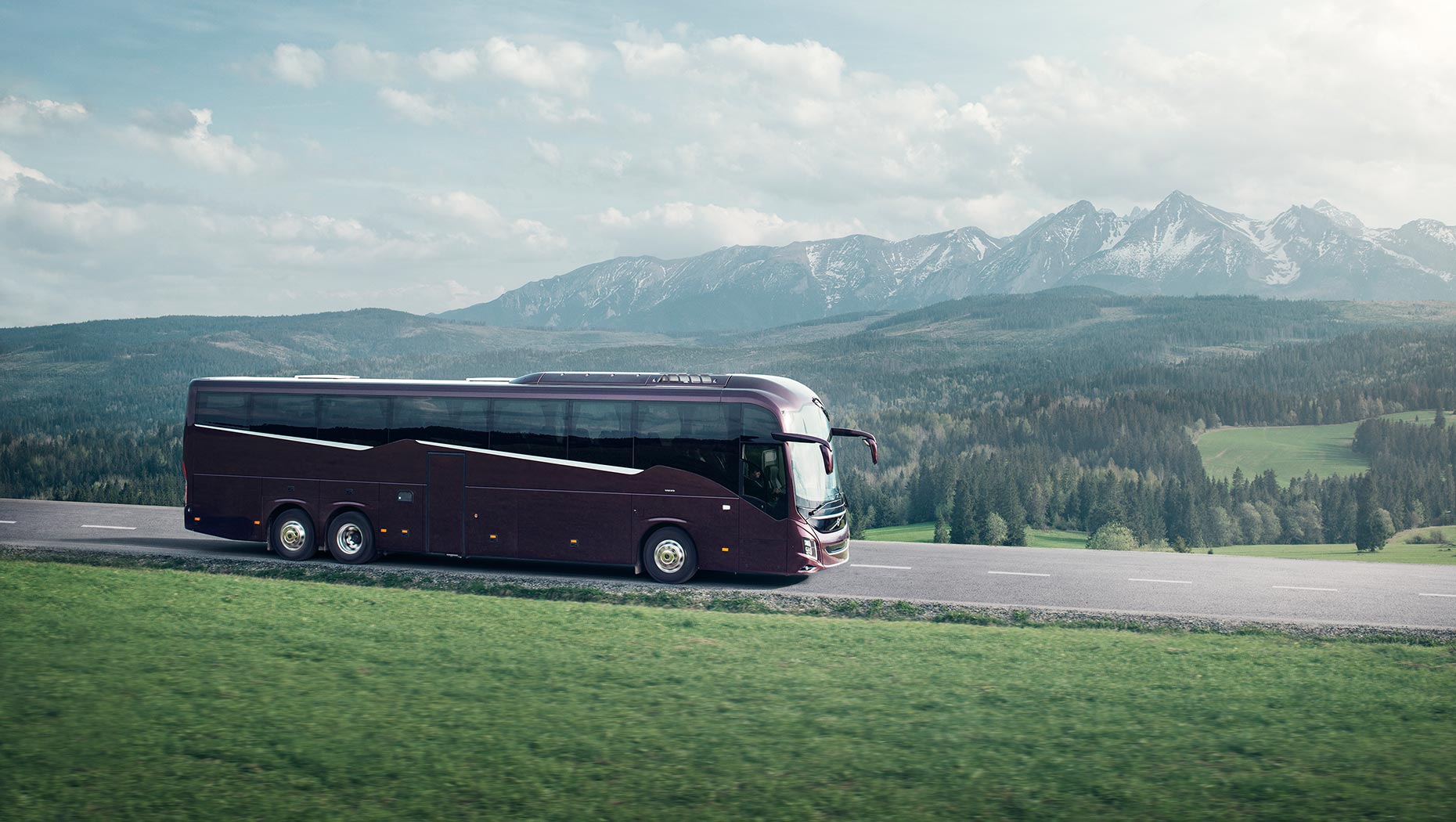
Long-distance buses are increasingly being recognized as a greener travel alternative because they can carry many passengers in one vehicle, lowering emissions per person compared with cars and, in many cases, planes. Recent transport and sustainability sources report that coaches and long-distance buses can produce far less carbon per passenger-kilometer than private cars and air travel, especially when vehicles run with high occupancy and modern fleets.
This shift is happening at an important time. Long-distance travel plays an outsized role in passenger transport emissions, and research highlighted by UKERC notes that flying in particular offers very large emissions-reduction opportunities when travelers switch to lower-carbon modes. As countries and travelers look for realistic ways to cut transport emissions without giving up mobility, long-distance buses are becoming a more practical and visible part of the solution.
Why buses are greener
The environmental logic behind long-distance buses is straightforward: one vehicle can replace dozens of cars and concentrate energy use across many passengers. The Confederation of Passenger Transport in the UK says coaches are among the cleanest vehicles on the road, with average carbon dioxide emissions per passenger journey around five times lower than air travel and six times lower than car travel.
Other sources reinforce the same pattern with slightly different figures. The World Resources Institute notes that buses and trains can reduce greenhouse gas emissions by up to two-thirds per passenger-kilometer compared with private vehicles. A BBC summary of UK government emissions factors reported coach travel at 27 g of CO2 per person per kilometer, compared with 41 g for UK rail in that dataset, though figures vary by occupancy and vehicle type.
Recent industry reporting in Europe gives similarly strong numbers for modern coach travel. TNP Consultants wrote in 2025 that FlixBus reported emissions of 27.8 grams of CO2 per passenger-kilometer in Europe, positioning long-distance buses as significantly more carbon-efficient than cars or planes. Even when exact comparisons vary by country and methodology, the main conclusion remains stable: coaches perform well because they move large numbers of people collectively.
Better than flying on many routes
Long-distance buses are becoming especially relevant as an alternative to short- and medium-haul flying. On these routes, the emissions advantage of buses can be substantial, and the practical difference in total travel time is not always as large as travelers expect once airport procedures are included.
Several sources make the environmental comparison clear. The Confederation of Passenger Transport says coach passenger emissions are around five times lower than air travel. An older but still useful comparison for school trips estimated that, for routes under 700 miles, coach travel is far greener than flying, citing a Paris journey that produced roughly 0.02 tonnes of CO2 by coach versus 0.09 tonnes by air.
This matters because long-distance buses can serve a part of the market that rail does not always reach well. In countries with uneven rail infrastructure, buses offer a flexible network that can connect secondary cities, rural areas, and tourism zones without the capital intensity of rail expansion. TNP Consultants specifically argues that in geographically complex countries such as Italy, long-distance buses provide a flexible and scalable lower-emission option where rail development faces challenges.
Affordability supports sustainability
One reason buses are becoming a stronger green alternative is that they are not only lower-emission; they are also affordable. Sustainability often fails when the greener option is too expensive or too limited for ordinary travelers. Long-distance buses help solve that problem by combining lower cost with lower emissions, which makes behavior change more realistic.
Affordability expands access in two ways. First, it makes low-impact travel possible for people who cannot afford rail tickets or last-minute flights. Second, it encourages more consistent collective transport use, which improves the environmental performance of the whole mobility system by reducing car dependence.
This relationship between cost and climate matters especially in emerging markets and geographically diverse regions. A 2026 bus market overview noted that demand is growing in Asia-Pacific, Latin America, and Africa as expanding public transport networks and affordability needs push adoption. If greener travel is going to scale globally, it needs mass-market options, and buses are one of the clearest examples.
Technology is improving the model
Another reason long-distance buses are gaining ground is that the technology behind them is getting better. Operators are modernizing fleets with more fuel-efficient vehicles, hybrid systems, electric models in some contexts, lightweight materials, smarter route management, and even onboard solar technology to reduce auxiliary power demand.
Green Energy reported in 2024 on FlixBus partnerships using solar panels to reduce generator use, lower fuel consumption, and cut emissions. A 2026 industry trends report also highlighted energy-efficient design, lightweight materials, and rising interest in electric and hybrid buses, noting that electric buses can cut greenhouse gas emissions by about 40% compared with traditional diesel options in some use cases.
These innovations do not mean every long-distance bus is suddenly zero-emission. Infrastructure, battery range, and capital costs remain challenges, especially for very long routes. But the direction is clear: bus operators are no longer selling only a low-cost seat; they are increasingly building a more efficient and lower-emission transport product.
Occupancy changes everything
A critical factor in bus sustainability is occupancy. A coach with many passengers spreads emissions across a large group, which is why the per-person footprint can fall so sharply. Seagoing Green notes that a bus can carry up to 50 passengers and that fuller buses become more sustainable because the carbon footprint is divided among more travelers.
This is one of the strongest advantages of long-distance buses in real-world travel systems. Airlines and private cars both suffer from inefficiencies in different ways: planes have high climate intensity, and cars often move only one or two people at a time. Buses, by contrast, can turn high passenger density into a major environmental benefit when routes are well used.
That is why collective travel policy matters. According to the Confederation of Passenger Transport, one coach-load of people can keep as many as 50 cars off the road. In climate terms, the bus is not just reducing emissions per traveler; it is directly displacing a more polluting pattern of mobility.
Good for more than carbon
The green case for long-distance buses is not only about carbon dioxide. Collective road transport can also reduce congestion, improve land-use efficiency compared with car-dependent systems, and make lower-impact travel normal for people who might otherwise drive. Transfinder’s overview of bus transit argues that bus travel reduces greenhouse gas emissions because it saves fuel and provides a more efficient method of transport.
There are also social sustainability benefits. Buses connect towns and regions that may not have airports or strong rail service, allowing mobility without requiring private car ownership. That supports a broader version of sustainable travel—one that includes affordability, accessibility, and regional inclusion alongside environmental impact.
For tourism, this can be especially valuable. Long-distance buses help travelers reach smaller destinations that are often skipped by air networks. That can spread visitor spending beyond major hubs and reduce pressure on the most overcrowded cities and airports.
Why the trend is accelerating now
Several wider trends are helping buses become more visible as a green travel alternative. One is the growing attention to climate-conscious travel choices. Another is policy momentum: the United Nations declared 2026–2035 the first UN Decade of Sustainable Transport, signaling that cleaner mobility is becoming a more central global priority.
There is also a market shift underway. A 2026 global bus market overview describes rising investment in electric mobility, fleet modernization, digital route optimization, and energy-efficient drivetrains. These changes make buses more attractive not just environmentally, but operationally and commercially as well.
At the same time, travelers are becoming more open to alternatives to flying, especially for regional trips. When buses offer competitive prices, direct city-to-city service, onboard Wi-Fi, app-based booking, and modern comfort features, they become easier to choose. Sustainability works best when it aligns with convenience, and that is increasingly what the long-distance bus industry is trying to deliver.
Limits and trade-offs
Long-distance buses are not a perfect solution. Diesel fleets still produce emissions, traffic can affect reliability, and on some heavily electrified corridors trains may remain the better low-carbon option. The green value of buses also depends heavily on vehicle standards, route efficiency, and passenger load.
Still, imperfection does not cancel out progress. The evidence from transport groups, industry analysis, and public-transport climate research consistently shows that buses are far preferable to single-occupancy car travel and often much better than flying from a per-passenger emissions perspective. In many regions, they are also more deployable in the near term than major rail expansion.
That practical flexibility is exactly why buses matter. Climate-friendly transport cannot rely on one ideal solution for every route. It needs a mix of scalable alternatives, and long-distance buses are proving that they can fill a major gap between local transit and long-haul rail.
Long-distance buses are becoming a green travel alternative because they combine lower emissions, affordable fares, network flexibility, and improving technology in one scalable mode of transport. They will not replace every flight or every train journey, but they are increasingly giving travelers a realistic way to reduce their footprint without sacrificing access or budget.
For eco-conscious travelers, that is a meaningful shift. The greener future of travel will not be built only on high-speed rail and electric cars. It will also depend on collective, accessible options that work across real geographies and real budgets, and long-distance buses are showing that they belong in that future.